The drive up the SP22 into Sardinia’s Barbagia region isn’t for the faint of heart. Hairpin turns fold into one another. Sun-baked limestone cliffs drop off into deep ravines. You grip the steering wheel a little tighter as the Supramonte mountains loom in the windshield.
Then, you hit Orgosolo.
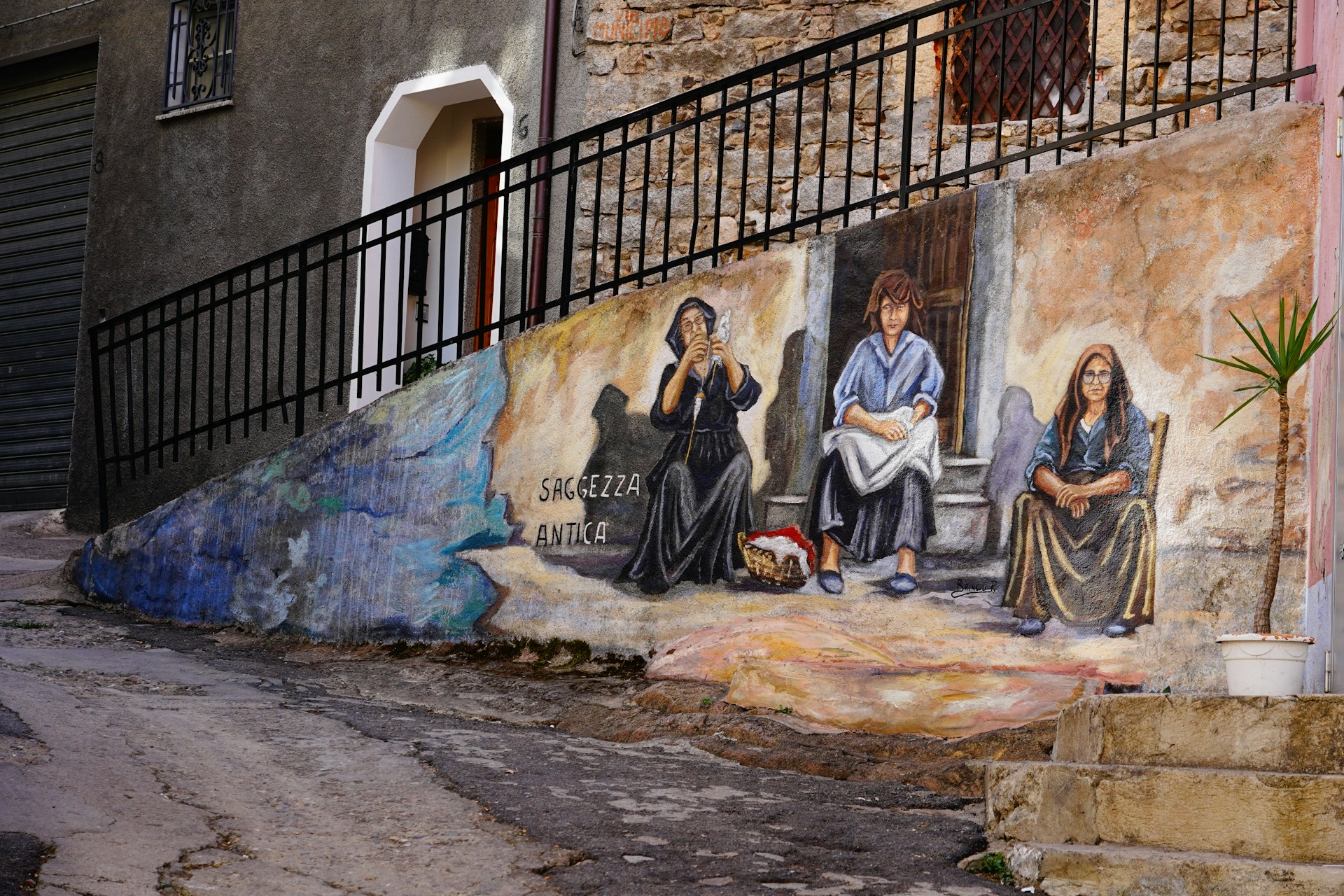
Forget everything you know about pristine Italian art towns. There are no velvet ropes here. No polite museum docents whispering about Renaissance brushstrokes. Orgosolo is loud, raw, and unapologetically political. The walls literally shout at you. Since 1969, locals and international artists have painted over 150 murals across the town’s facades, turning the streets into an open-air archive of dissent.
I spent a few days walking these steep, sun-bleached streets. If you’re planning a trip, drop your romanticized expectations at the door. Orgosolo requires a bit of grit, a good pair of walking shoes, and a healthy appetite. Here is exactly how to tackle it.
The Walls That Speak
The mural movement here didn’t start as an art project. It started as a riot.
In 1969, the Italian government tried to commandeer the nearby Pratobello pastures to build a military firing range. The local shepherds—men who relied on that land to survive—said absolutely not. They occupied the fields. They faced down the military. And they won.
That massive act of defiance sparked a creative explosion. An anarchist theater group from Milan painted the first mural. Soon after, a local teacher named Francesco Del Casino took the reins. His distinct, Picasso-esque style still defines the town’s visual identity today.
Start your walk on Corso Repubblica, the main artery of the town. You don’t need a map to find the art; it surrounds you immediately. You’ll see murals protesting NATO military bases plastered right next to paintings honoring the quiet, grueling life of a village elder. Some of the paint is peeling. The colors on the older works are fading under the harsh Mediterranean sun. That is entirely the point. It’s a living, breathing neighborhood, not a curated gallery.
If you want the actual context behind the paint, walk up to the small kiosk near Piazza Caduti in Guerra. You can rent a yellow audio guide for €5. It covers about 40 of the most significant murals. Get it. Without the audio guide, you’re just looking at cool street art. With it, you understand the decades of political fury and local pride that built this place.
The Reality of Getting Around
Let’s talk logistics. Driving into the center of Orgosolo is a rookie mistake.
These streets were built for donkeys, shepherds, and foot traffic. They were not built for your rented Fiat Panda. The roads narrow without warning, and local drivers do not slow down for hesitant tourists.
Your best bet is to park on the outskirts of town. There is a municipal parking area near Via Locoe that usually has space. Leave the car and walk in. Alternatively, skip the driving stress entirely and take the ARST bus from Nuoro. Line 509 runs regularly and costs about €2.50 for a one-way ticket.
Navigating the transit schedules and parking zones here can be frustrating if you don’t speak Italian. To save yourself a scratched rental car and a lot of wasted time, check out this essential visitor information for navigating Orgosolo. It breaks down the exact bus routes and parking strategies you need.
Eating in the Supramonte
You will get hungry, and you are in the culinary heart of Sardinia. Do not ask for pizza.
The food in the Barbagia region is heavy, rich, and deeply tied to the land. You want to find a local agriturismo or a traditional trattoria. Expect to pay around €35 to €40 for a set menu.
What do you get for your money? A mountain of food. Meals usually start with local cured meats, sharp pecorino cheese, and pane carasau—a paper-thin, crispy shepherd’s bread. Then comes the main event: porceddu. This is suckling pig, roasted slowly on a spit over a wood fire until the skin shatters like glass and the meat melts in your mouth.
Wash it all down with Cannonau. This is the local red wine, and it is dangerously smooth. Be warned: Cannonau regularly hits 14% to 15% ABV. If you drink it like table water, the steep walk back to your car is going to be miserable. Pace yourself. Finish your meal with a shot of freezing cold mirto, a local liqueur made from myrtle berries that acts as a digestif.
Beyond the Town Limits
If you have a car and half a day to spare, get out of the town and into the Supramonte mountains. The landscape here explains the stubborn, independent character of the people. It is harsh, jagged, and isolated.
Drive 30 minutes south to the Funtana Bona trailhead. From there, you can hike up Monte Novo San Giovanni. It’s a 1,316-meter limestone spire that shoots straight up out of the forest. The hike is a steep, breathless 45-minute scramble. When you reach the top, you are rewarded with 360-degree views of dense holm oak forests and endless gray ridges. You likely won’t see another soul on the trail.
The Quick Intel Checklist
Before you pull the trigger on your trip, keep these hard facts in mind:
Cash is King: Bring plenty of Euros. While the larger restaurants take cards, the small cafes, bakeries, and the audio guide kiosk operate strictly on cash.
Timing the Crowds: Tour buses from the coastal resorts roll in around 10:30 AM. If you want photographs of the murals without a crowd of people in bucket hats blocking the view, get on the streets by 8:30 AM.
The Language: You will hear Italian, but locals speak Sardu—specifically the Nuorese dialect—among themselves. It sounds entirely different from standard Italian. A simple grazie (thank you) or buongiorno (good morning) still goes a long way.
Dress Code: Leave the flip-flops at the beach. The cobblestones are uneven and the inclines are steep. Wear actual sneakers or light hiking shoes.
Orgosolo doesn’t care if you like it. It isn’t trying to charm you. It exists on its own terms, fiercely protective of its history and its mountains. That exact stubbornness is exactly what makes it one of the most compelling places you can step foot in on the island. Get in early, walk the hills, eat the pork, and listen to what the walls have to say.